2-3-4 Friday: 29 Jun 2025
‘Seeking to spark the most potential within you per word of any online newsletter’
1 thought
Why do we become the very leaders that we
hate?
In the company I run, I’ve recently faced many problems managing the different issues that arise, whether they be with staff, work, or clients.
I confess that I am not the best leader. But it’s also made me wonder why this has happened.
One easy thing to do is to pin the blame on my past
leaders, and fault them for not being better role models to me. That can be a big reason, especially since great bosses, tend to produce greater bosses.
One only needs to look at Sydney Finkelstein’s work on Superbosses, where he studied the legends in the field, and noticed,
If you looked at the top fifty people in these industries, you would find that perhaps
fifteen or twenty had once worked for or had been mentored by one or a few talent spawners—or “superbosses”.
I never had a superboss I could learn from. So it’s left me to my own devices, trying to figure out
how does one become a manager?
In another conversation with my
friend who had been operating businesses for 9 years, he said,
I don’t think you (he referred to me), can really get into relationships if you have some personal problems.
Which did make me think: I can’t manage better if I don’t better manage myself.
Which is why to make your team
work, you need to first do the self-work.
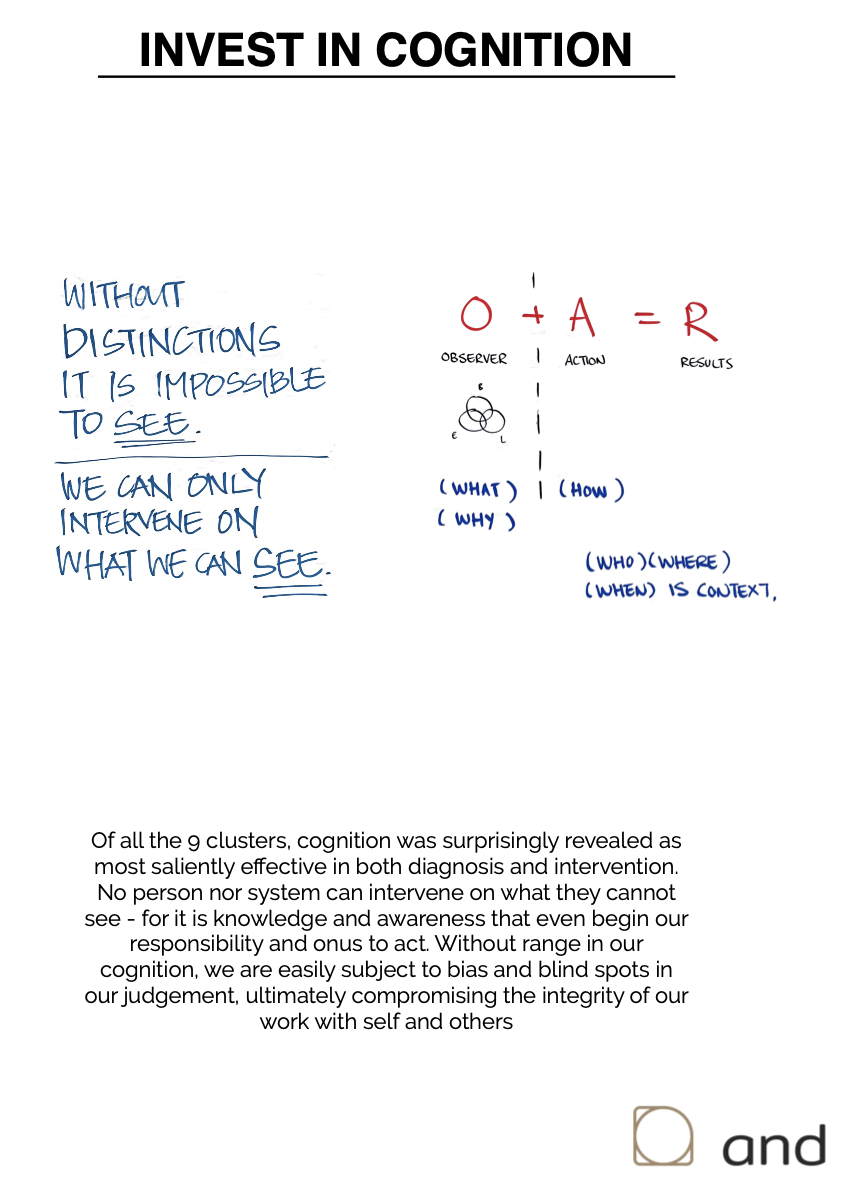
And to do that, as Tong Yee says,
without distinctions it’s impossible to see.
You can only intervene on what you can see.
It is why the manager’s first job is to invest in their own ability to see,
themselves.
I used to be completely blind to the way I would show up in different contexts. Looking back, I realise how immature I was in my first job, by giving the cold shoulder to a colleague I disagreed with.
What helped me was therapy for the last 9 years (which still continues), and also in recent times, the identification of a core root issue out of which my problems arise.
If you know the root issue, then you need to be willing to take action to address that. It’s not just about being willing to see
that you have a hairline fracture, but about being willing to find the doctor, get the diagnosis, listen to the doctor about resting, and being willing to obey that.
It takes awareness to tell where you’re hurting, and a willingness to contend with that imperfection.
Because if you fail to do that, you will just end up hurting others
more.
1 talk
“The best cure to feeling uncomfortable about making mistakes is to make more mistakes.”
- Benny, a polyglot who speaks many languages, explaining how he learnt them in Hidden Potential by Adam Grant
1 tip
Benny picks up languages in the matter of months. How? Through a technique called ‘flooding’, where he overloads himself with ways that he has to use the language, or risk the averse situation of being socially alone for long periods of time.
It’s the same. How do you learn to lead or manage, beyond just doing
it?
You can read all the books you want, but you won’t ever be ready until you do it.
But how do you improve?
Keep making more mistakes. I know - this sounds like stupid advice. It’s not just going outside your comfort zone. Because many people have done so, without taking any new
actions.
The clearest sign of this came when I studied in the U.K. I looked around me and saw other Singaporeans, sticking with other Singaporeans, and thought,
did you spend 200k of your money to recreate a Singapore in Nottingham?
Why?
They had taken steps to change the context, but had not changed their actions.
In the same way, you can get into that new company, that promotion, but still do things entirely the same.
You have to do something to make mistakes - and to be willing to learn from them.
For the last few years, as I’ve worked with more clients, colleagues, and peers, I’ve realised that the fundamental difference between those who grow and those who don’t, is their willingness to act first , before figuring things out along the way.
Those who remain stuck, are those who think about acting, without acting.
They think and consider their options for a long time, hoping that they can get a close to perfect solution, waiting for the conditions to be right, but they never make the call.
Because the time is not right, the resources are not enough, and the situation continues staying stuck.
Don’t just move to somewhere new. Do things
anew.
Then you will start seeing yourself anew.
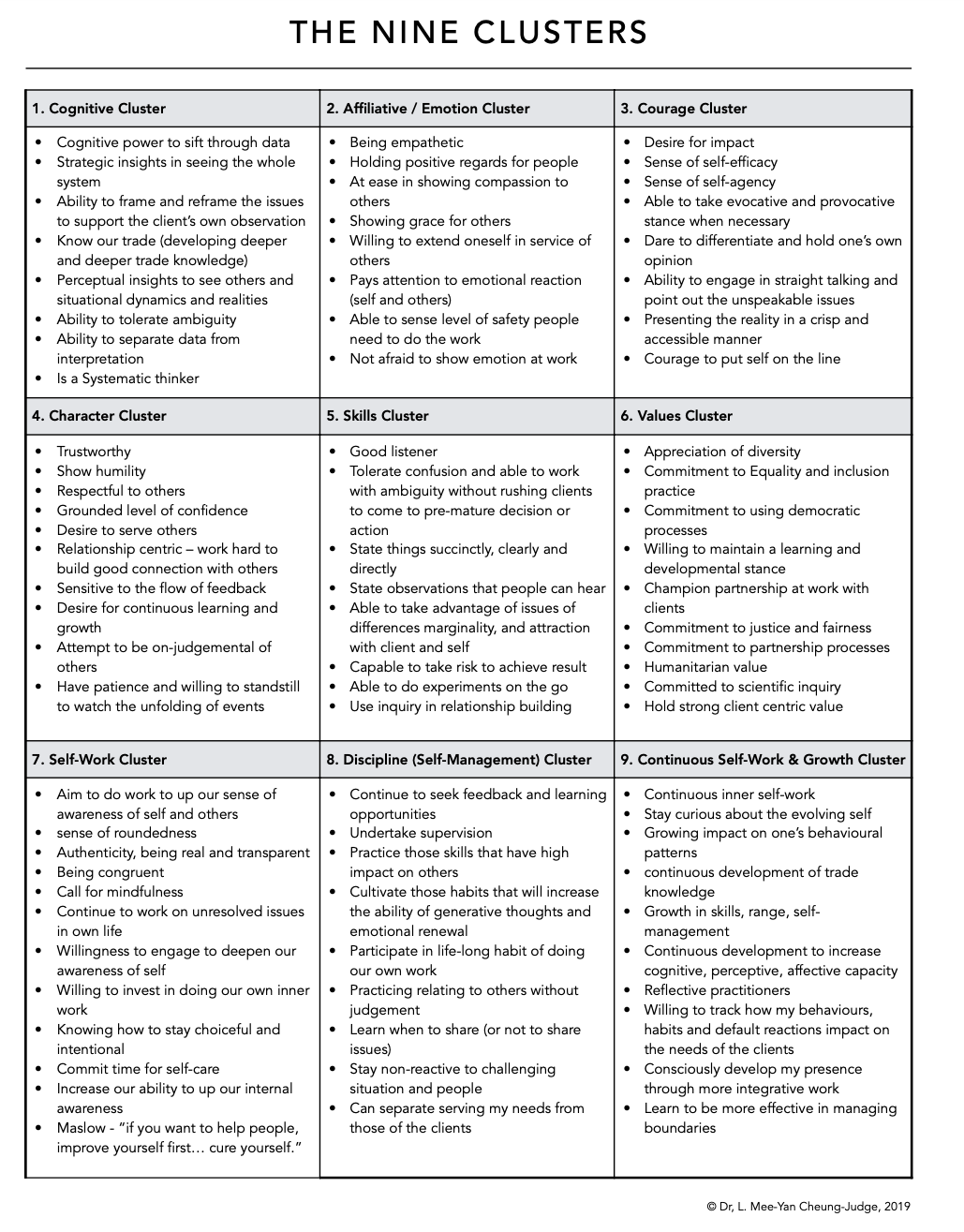
P.S. Dr. Mee-Yan Cheung-Judge's Nine
Clusters is a useful way to start observing how you're using your self, in the systems you manage.
John
Live Young, Live Well - Work Your Love