2-3-4 Friday: 5 July
‘Seeking to spark the most potential within you per word of any online newsletter’
1 thought
When Steve Jobs talked about the PC, he shared this
study he had read about in Scientific American when he was 12. It was studying the efficiency of locomotion, or how many kilojoules we expended to get from point A to point B.
“The condor used the least energy to move a kilometer. And, humans came in with a rather unimpressive showing, about a third of the way down the list.
But, then somebody at Scientific American had the insight to test the efficiency of locomotion for a man on a bicycle. And, a man on a bicycle, a human on a bicycle, blew the condor away, completely off the top of the charts.
One thing that strikes me is that we humans, we are tool builders. It amplifies these inherent capabilities that we have.
And
that’s what a computer is to me. What a computer is to me is it’s the most remarkable tool that we’ve ever come up with, and it’s the equivalent of a bicycle for our minds.”
How would Steve Jobs feel if he looked at humans using technology today? Whether that be doom-scrolling TikTok, watching Netflix for hours on end, or prompting ChatGPT for answers to their work?
He might well be disappointed.
Our human brain tends towards laziness. That’s why we resort to neural shortcuts, like depending on cognitive biases, preconceived notions, and procrastination.
And that’s why we now tend towards the proverbial computer in our pocket, the phone.
Some of you
who have read this newsletter long enough would know that I’ve advocated against phones, and that I do not personally use social media like Facebook and Instagram. Yet despite this, I still struggle. It’s tempting to go down the route of thinking you’re using your phone for ‘work’ - WhatsApp to settle work messages, and the web to check email.
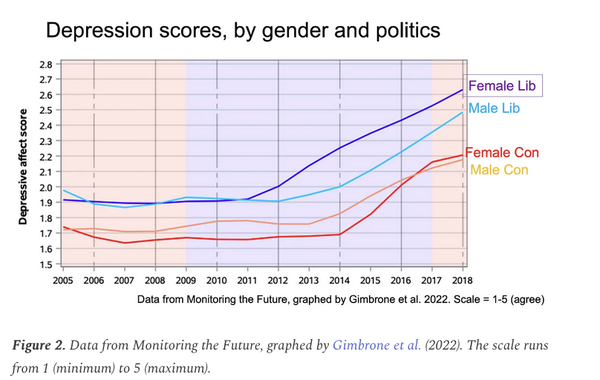
Recently, I read Haidt’s “The Anxious Generation”, where he argued that The Great
Rewiring from phones was what was disrupting the social lives of Gen Zs, and creating a surge in mental illness.
I had seen this when I practiced social work. Kids were coming to me with the strangest experiences.
- One girl had been verbally insulted by the entire school online after she posted a funny video of herself in uniform. It resulted in her being scared to go to
school, and spending weeks at home.
- Another parent told me of how her 8 year old son had slammed the doorknob off a door when she controlled his phone gaming.
The effects are clear - so the question is,
why are we doing so little about it?
1 talk
If your body was turned over to just anyone, you would doubtless
take exception. Why aren’t you ashamed that you have made your
mind vulnerable to anyone who happens to criticize you, so that it
automatically becomes confused and upset?
- Epictetus, Greek Stoic philosopher
1 tip
Haidt’s solution? Speak up about the problem, and link up with other parents.
In one study he shared, Latane and Darley
brought students into a lab to discuss problems of urban life. After a few minutes, smoke began to pour into the room.
In the first situation, students were alone in the waiting room. In that condition, 75% took action, with half of the subjects leaving the room to find the experimenter within two minutes of noticing the smoke’s appearance.
In another condition,
three students were brought into the waiting room one at a time and seated at separate desks.
The experimenters wanted to know:
Would having multiple people witnessing the smoke increase or decrease the likelihood that anyone would take action?
The answer: It decreased
it.
Only three of the 24 students who were in that condition got up to report the smoke, and only one did so within the first four minutes, even though the smoke began to obstruct everyone’s vision by then.
The phone usage of ourselves, and the people around us, is like watching smoke pour into the room. Because few people stand up to speak about it, we sit
there, continuing to use our phone, and allowing others to use their phone.
None of this can prepare us for the social epidemic that has already started because of our phone usage.
Some people argue that the data shows correlation and not causality. Yet whilst mental health conditions have been rising since the 1950s, none of it has been like the hockey stick
increases in the early 2010s.