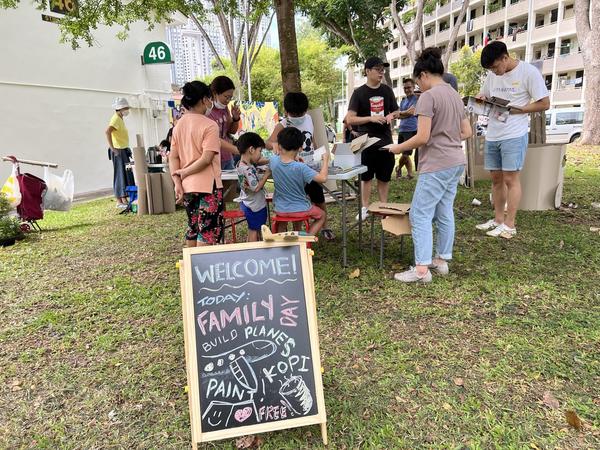
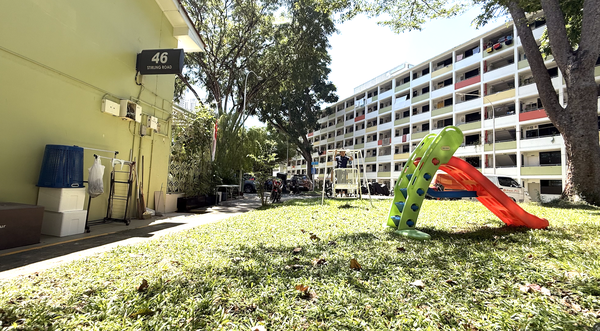
One of the organizers tells me, that in Singapore, we’re used to trading time for money. Do something free, and people immediately think there’s a hidden agenda. In fact, when she first started, people asked, “You from government?”
But she says,
The
only currency here is the currency of kindness, and friendship.
There’s no push here for people to go to church, to take part in surveys, to do anything. They just eat, chat, and then go home.
What the hell is this?
It was started simply as an initiative to build more lovable neighborhoods
around Queenstown, where these residents stayed. They realised that people barely even knew each other, and they wondered what it’d be like if there were monthly communions for neighbors to gather around, with no agenda other than the purposes of forming closer ties.
Well, they did.
When I look back at my year, I often look at Queenstown Kakis, and think of this quote from former Nominated Member of Parliament Kuik Shiao Yin, who wrote,
Never doubt that a small group of thoughtful, committed and skilled citizens can
shift the system; indeed, it's the only thing that ever has.
Look at what the volunteers at Queenstown Kakis do, and it’s not easy. They shift chairs, prepare food, wash cups, and most of it isn’t recognized by people like me, who have a nice meal, and return home to snooze.
Why don’t they just get cynical, and give up? In fact, many do. You’d find
them on Reddit, complaining.
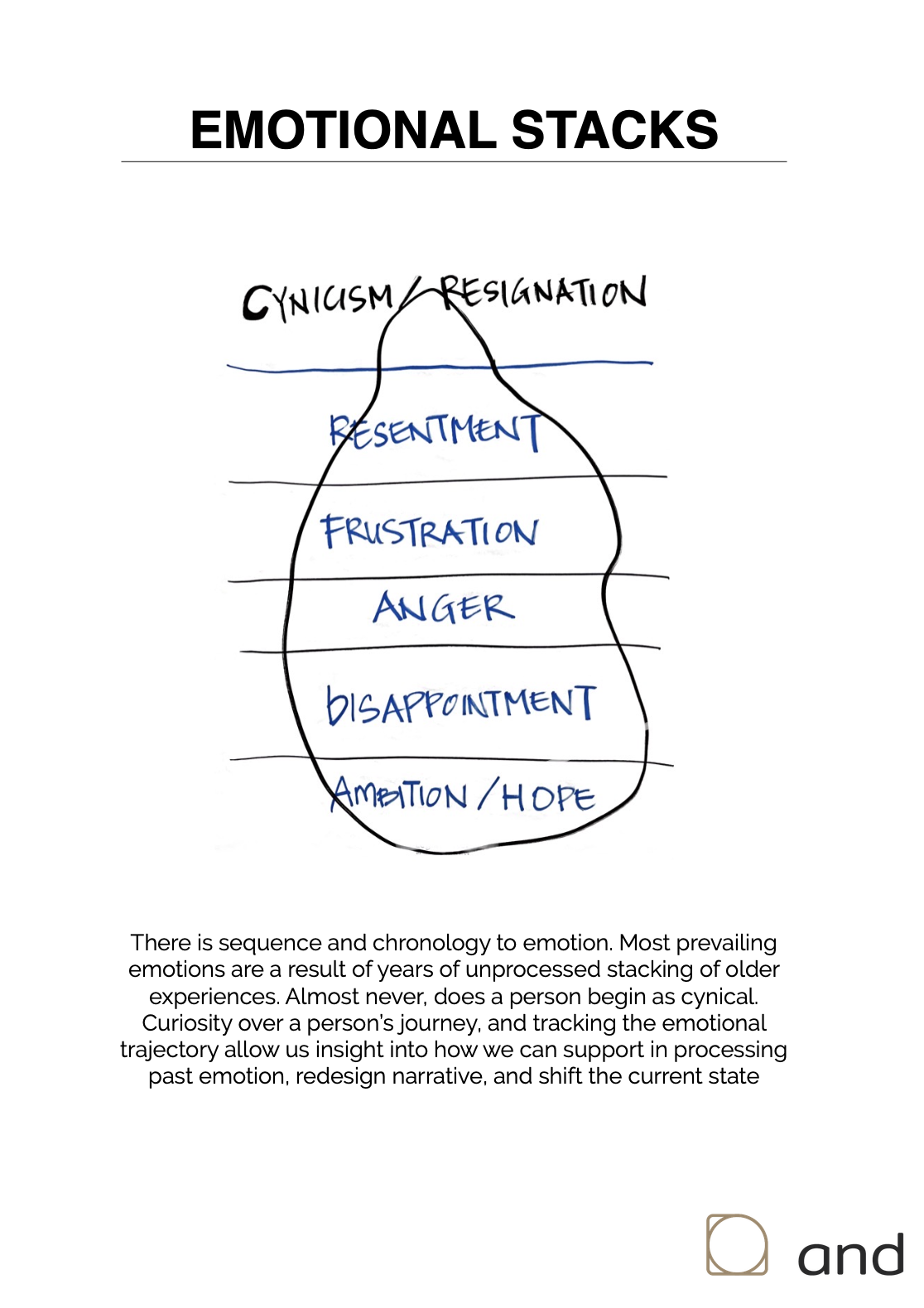
But if I use Tong Yee’s model of emotional stacks, and how our ambitions and hopes gradate to cynicism, it’s crucial to see how to stop our disappointments from festering into eventual cynicism. Cynicism keeps us complaining, out of action, and being the grouchy, unhappy life of the party.
1 talk
Never doubt that a small group of thoughtful, committed and skilled citizens can shift the system; indeed, it's the only thing that
ever has.
- Kuik Shiao-Yin, former Nominated MP
1 tip
How do we keep the hope going?
In May this year, I had the chance to attend Tong Yee’s training. Most exercises were familiar. In one, the class named pairs
that were interesting to them. These were dyads that they thought had unspoken drama, some romantic tension, or were simply nice conversations to sit back, and watch.
We would then vote for the ones we most enjoyed.
So I was paired with this elderly lady who I felt very angry with. She had been making remarks which pissed me off. For example, during a
large group sharing, where people shared personal stories, she remarked at the sharer that maybe she needed time to sort herself out.
So when I sat with her, I had a proper go.
Who the f!>$ do you think you are!
Credit to her, she didn’t react. She responded with kindness and
empathy.
My observer later told me it was like a young samurai flashing out his sword, and the wiser one sitting back and saying,
let’s see what you have.
Credit to Tong Yee, he created enough psychological safety to allow us to say the unspeakables, and to release the energy into the
room.
But I think this is what keeps our hope going.
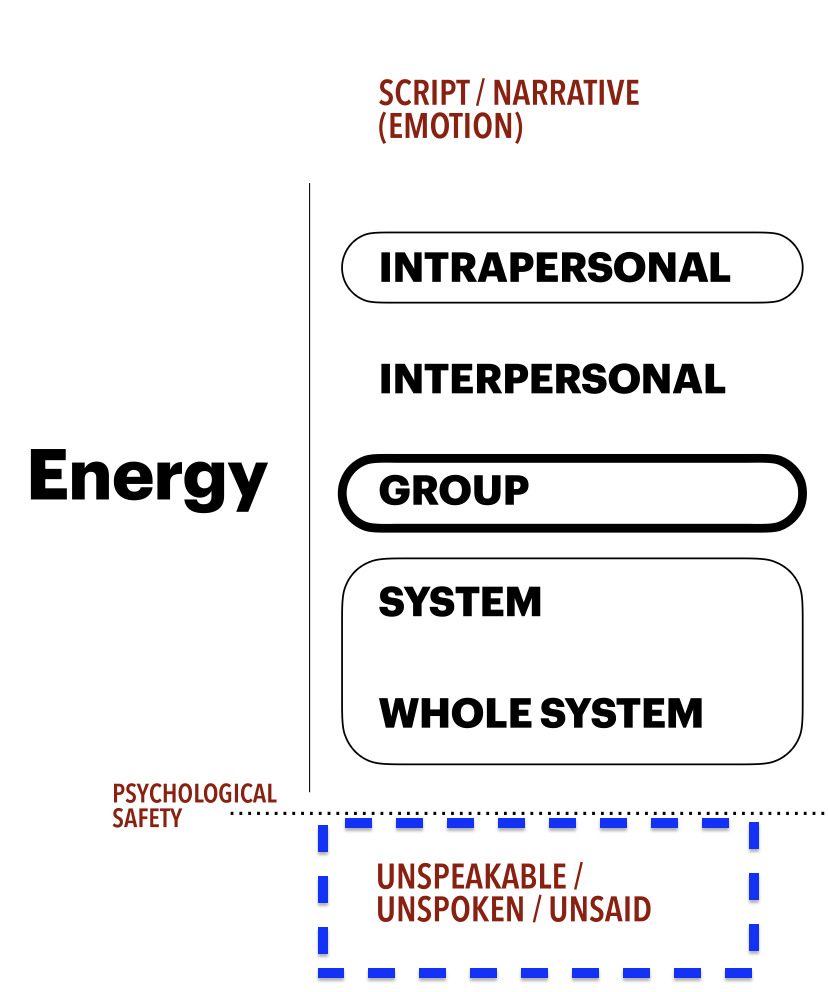
Credit: Tong
Yee
- When we are able to name our unspoken tensions,
- When we are able to take responsibility for what we feel about these unspoken tensions,
- And when we are able to make positive change using the levers of trust, power, authority and force, to restore greater health into the systems we are in.
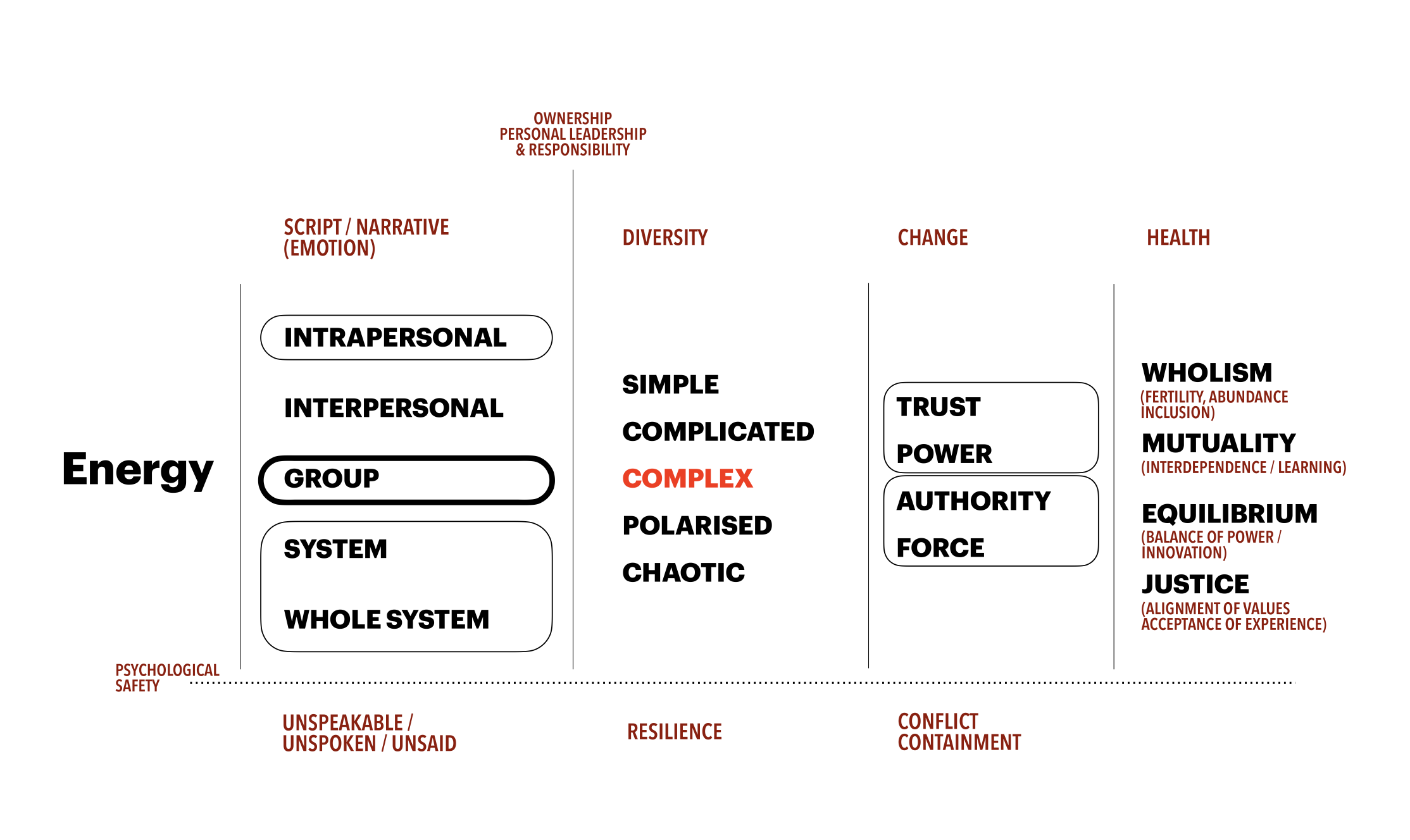
Credit: Tong Yee
Sound like mambo jambo? Okay, here’s one personal
example.
The first 2 years of my social service career were marked by enormous (wasted) energy. I was trying to change some of the biggest problems in social work, like low-income, and poor social worker conditions. I wrote more than 300 articles on my blog, podcasted, pitched the media, wrote books, but nothing ever seemed to move.
My breaking point came last
October, when I was asked to resign, or get terminated.
That was the first time I saw that the social service system I was part of was at a different pace of change, and fighting it would only cause me more pain.
Rather than walking over and over again into the bear’s trap, I decided to go to where I was trusted, and had some degree of power. With content marketing, in a
municipal authority called the Town Council.
They had abundant resources. There was healthy trust between our team, and theirs. They assigned me some degree of power. And slowly, we saw the continued health of the districts - with people being joyful living there.
I will close with one last story.
In May 2025, after I went home following Tong Yee’s training, a sentence from him reverberated in my mind.
Go where the energy is.
It dawned on me that the years of pushing change in the social services sector, had never resulted in any fruitful push. Instead the system had chewed me, and spat me out.
It was a black hole for me. More of my energy in, less outcomes out.
After five and a half long years of fighting, I finally decided to lay down my sword. Almost immediately, I felt a lift. A joy. A realization that all the suffering I had, was my own choice. I didn’t have to fight people who didn’t want me.
This 2025, it’s useful to
ask,
where are the black holes in your work, relationships, and life?
Where is there little fruit, little progress?
Is it time to work harder, or to move on? If you’re working harder, what exactly are you working towards?
John
Live Young, Live Well - Work Your Love