2-3-4: Don't take that mum and pop shop for granted
Published: Sun, 10/19/25
That small food store you once loved? Probably dead, if you didn't support it.
2-3-4 Friday: How great spaces die
‘Seeking to spark the most potential within you per word of any online newsletter’
1 thought
2 months ago, The Projector, an indie
cinema, closed down, for good.
I was first introduced to it as a struggling freelancer in 2022, when someone recommended its movies to me. Not knowing where else to spend my
weekends, I started going.
And going, until every other weekend was spent in those halls, watching movie after movie.
For years, those movie tickets were the only luxury I gave to myself, especially due to my low income of 400 odd dollars a month.
More than anything else, those movies gave me a
space to think through the myriad of issues that we, I faced in Singapore.
For example, the documentary Unteachable aired in 2023. It followed a student struggling through the education system of Singapore, and asked the question,
if the system doesn’t value you,
how do you find your own
value?
It’s particularly poignant for the many of us here who are social workers, doctors, creatives, who care about the
different industries we are a part of, but are unable to see the corresponding financial pay off for these items.
But it also reminded me that if the system didn’t pay me well, then I had to find a way to work the system.
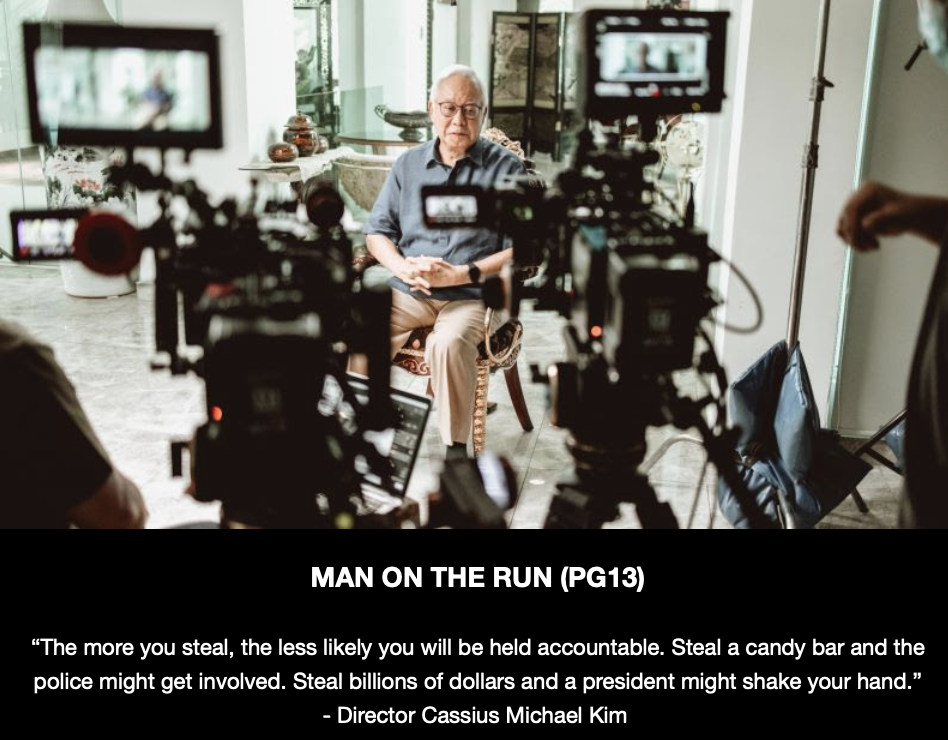
And so when the film Man on the Run featured, it was deeply moving. It shared the 1MDB sham, and how people made off with billions of dollars.
I then learnt to stop thinking that governments had our backs, and to start figuring out the loopholes in the systems, and to beat
them.
Beyond that, the movies sometimes came with dialogues with directors and actors, allowing me a window into the minds behind the films.
If I look back at my development, those movies were a big part of my growth.
As the months have passed, people have bemoaned the loss of a cultural
institution, but the hard question is,
did we deserve The Projector?
For all its efforts to create a space where people could think for themselves, it begged the question,
did people in Singapore even want to think?
For all its efforts, perhaps the sad fact was that people were more keen on feeding their brain with popcorn-worthy, sob-evoking K-dramas on Netflix.
Nothing against them, but it reflected a sad fact that most in Singapore would not think it worthy of walking out in the hot sun, spending $13.50, plonking themselves in the cinema, and sitting with other people to watch a movie that might be hit
(or miss).
They’d rather get the Netflix algorithm to recommend them something others like them loved.
So for all the complaints about how the government didn’t support The Projector, the sad fact is,
we didn’t take care of the institutions we loved.
It wouldn’t have taken much. A $100 (just 8 movies) a year from a thousand true fans, would have led them to cover their rentals for another 6 months.
So we should ourselves take responsibility and ownership for killing the very institutions we love.
1 talk
Don't build for cheaper and better and faster. Build for resilience - starting by supporting that small local store by your street.
1 tip
Here in Singapore, and many other nations, there’s been a real outpouring of grief, anger and frustration, about how we’ve opened our economies to global, big MNCs.
But they survive, because we support them.
Again, I say,
they survive because we support them.
This is not a stupid us vs them argument, but it’s saying quite simply, that we are reducing the resilience of our own local economies when we divert our
spending away from developing local skills, talent, and infrastructure, and spend instead on big business.
Yes, your local joint might not have that snazzy app that allows you to order and pick up in 10 minutes. And yes, their product is going to look more rough, more unrefined.
But if we continuously build the big, and neglect the small, we will come to the
point where the economy is at its knees, as it is right now.
Months ago, at a class, we were asked,
could we in Singapore have been responsible for the breakdown of globalization in the US?
I think we did have a role to play.
Because we kept insisting on cheaper and better prices, pursuing efficiency, over resilience, creating the natural impetus for offshoring and nearshoring, and the pushback against globalisation that we see today.
There's nothing wrong with wanting cheaper and better, but we also accompanied that with a refusal to hold Big Inc. to account for their tax avoidance, their data leaks, and a
constant desire to worship them and bring them abroad.
So the next time you buy something to eat, to watch, to be entertained with, don’t just support that big behemoth.
Your money means little to them.
But to that small struggling store by the side that’s looking anxiously around
for the next customer, your purchase might just keep them going.
Tell people about them. Give them more money than they charge.
Even if they survived for just another day, that’d still be worth it.