1 thought
This was not a sponsored post.
We’re hanging out at a church. Beside the church, is a columbarium, where the ashes of dead people are living.
We’re sat inside
and we’re talking, playing board games like Jenga. When you pull out a block, there are deep questions like “talk about the most difficult moment in your life.”
There are 19 adults, from those in their 20s, to white haired gents in their 40s, and it can feel a little like Singles Inferno. When I was first introduced to these events by Sacred Companion, a Christian dating agency, I wondered if anyone would pay $15 to play such games, and meet new people. Wasn’t it free to use a dating app? But as I heard more of their stories, I realised there were similarities.
People were simply sick and tired of dating
apps. But why? Isn’t a dating app great? It shows you the widest range of people in life.
You meet people who you’re only attracted to. Maybe you like their pithy introduction on life “I am looking for…” Then you meet.
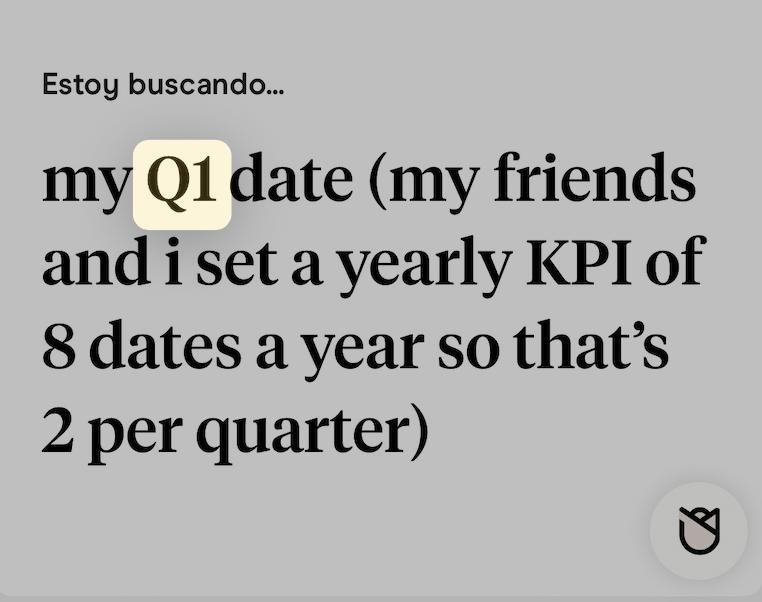
Screenshot of a really funny one I saw in January 2025. "I am looking for" is the prompt.
Shouldn’t this be the epitome of efficiency? Turns out, it doesn’t work for
many.
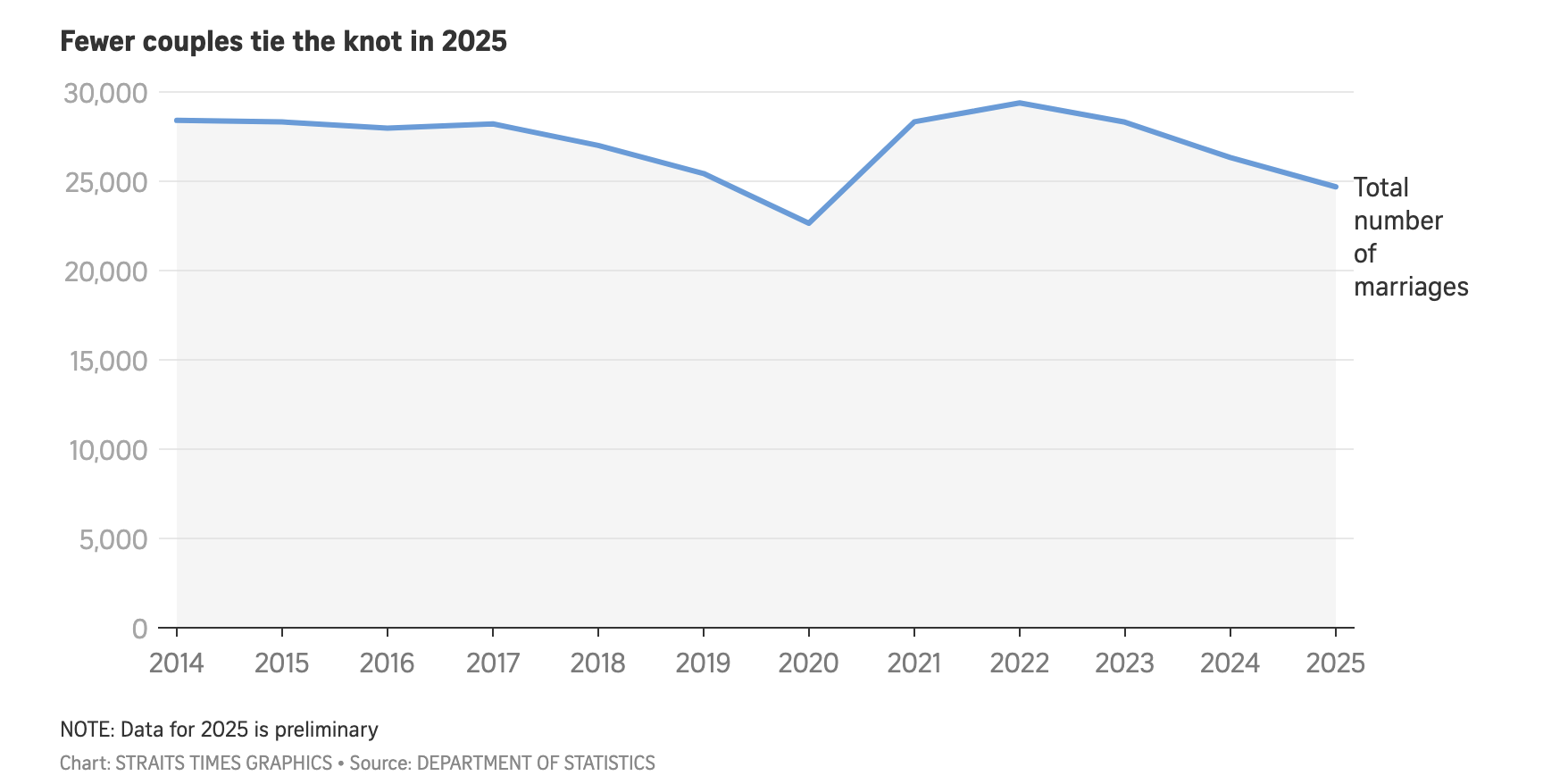
I’d even posit that this is probably what’s leading Singaporeans to record low marriages. Not because they are not looking, but it’s because they are not settling.
Someone once told me,
You don’t want to go from ‘I do!’, to “You will do.”
And dating apps give the illusion that there’s always someone better out there, up to the point
where people, faced with any sort of discomfort, will simply shirk the person and think, “There’s someone better out there.”
It’s not working, and it’s really sad to see. We’re optimizing precious human relationship, through a machine.
And we’re building flimsy human relationships based off how coders prefer to communicate. If you look at your typical software developer
(again, this is a stereotype), they spend lots of time instant messaging. We’ve adjusted our communication styles to fit that.
It didn’t use to be like that.
Remember the times when you had a pager? The technology was built for conversation first, connection later. We didn't place sultry, useless texts in priority, but focused on the better
conversations.
1 talk
Stop texting “how are you”. Set a time aside to actually call and converse.
1 tip
That evening, as I sat there, I admired each and everyone of them for making an effort to connect in
person, first, rather than trying to chat and hookup over a dating app. It reminds me that sometimes in life, human relationships are best mediated first in real life, synchronously, rather than asynchronously.
Texting is an asynchronous mode of communication, and sometimes when I watch our youths keep up texting exchanges for hours, walking, texting, sitting, texting, you wonder why they don’t just pick up the phone and
call.
Sherry Turkle posited an argument - that youths these days were afraid of the spontaneity of in person conversations. Are we?
That evening, sitting there, you saw each person awkwardly trying to make conversation, and small talk. About what church they were from, what they liked to do, what they liked to eat, and yes, many of the conversations could have
been had online.
But when we do it online, we take away the risk of the cut and thrust of conversation, and what we’re slowly losing is the art of spontaneous, good, conversation.
In April 2024, when I first attended Tong Yee’s workshops, he led us in learning the art of conversation. We were just asked to let the other person talk about a challenge they were
going through, without interrupting, for 5 minutes. And then we swapped.
For the first time, many of us felt heard. It was tense looking at the other person’s eyes, but many of us felt more deeply connected after the conversation.
So today, maybe you shouldn’t text a paltry ‘how are you’. Ask to call. Put in some effort.
And if you can’t, maybe it’s time to just prune that relationship.
PS. We're organising...
This Saturday, on 18 April, from 9am, we're organising a dialogue with local MP Sylvia Lim on "how we can build a more accepting and compassionate society."
Sounds too far off? We're living in stressful times, and you're probably pissed at your colleague for dropping the ball on yet another piece of work. We're going to show more and more grace to people as they make errors. How?
Well, come join us? I'm personally a big fan of MP Sylvia Lim, because of she doesn't shy away from saying the elephant in the room, looking stupid, and getting stuff
done.