2-3-4: These are the books that will help you grow
Published: Sun, 05/10/26
Updated: Sun, 05/10/26
Don't scroll more. Read more.
2-3-4 Friday: On reading
‘Seeking to spark the most potential within you per word of any online newsletter’
1 thought
When our Indonesian partners, Gramedia, invited us
to Jakarta to celebrate the launch of the children’s book, I was skeptical. Yes, they were the biggest publisher and bookstore owners in Indonesia, with more than 100 stores.
But we were retailing the book at $4, and the royalty we would get was 10%. That meant a total fee of 40 cents, per book we sold. It didn’t seem to make for good economics.
But I ended up going anyway,
to show respect to the Japanese author, Haruka, whom we’d brought to that market.
So when I met Adi, the director of book sales there, one of my first questions was his outlook for the market, given the weaker Indonesian market.
He surprised me by telling me about how book sales had kept growing over the past 5 years, and how there was a growing demand for
English books given the increasing recognition of English as a global language.
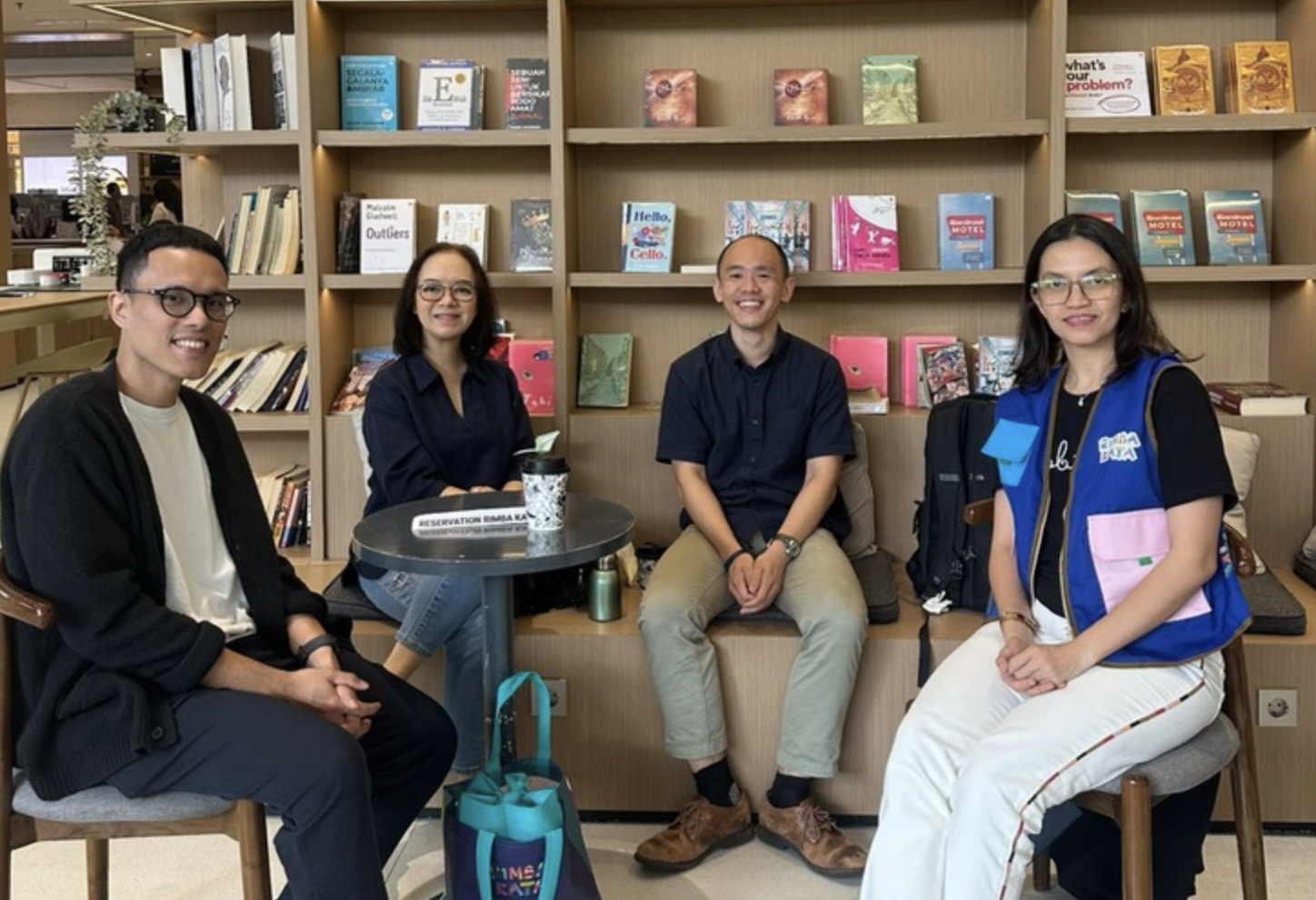
Adi, front left
“Books aren’t a sunset industry.”
But why? One would expect that with the explosion of AI, the wisdom found in books could be summed up within a pithy answer with the AI chatbot.
Why consume a 40k word book, when you can have a quick summary?
It seems that the $24 book makes no sense. But it continues to show resilience, despite the
economy.
Adi shared two things. Firstly, that books are an invitation to connect.
In many of the bookstores in Gramedia, they
have switched from calling “shop assistants” to “book advisors”. It signals the growing recognition that they are not just retailing a book, but taking the time to build a long-term relationship with the reader, to understand what they enjoy learning, and where they might want to explore.
A book is an invitation to start a relationship, not just with a book, but with ideas that others too,
believe.
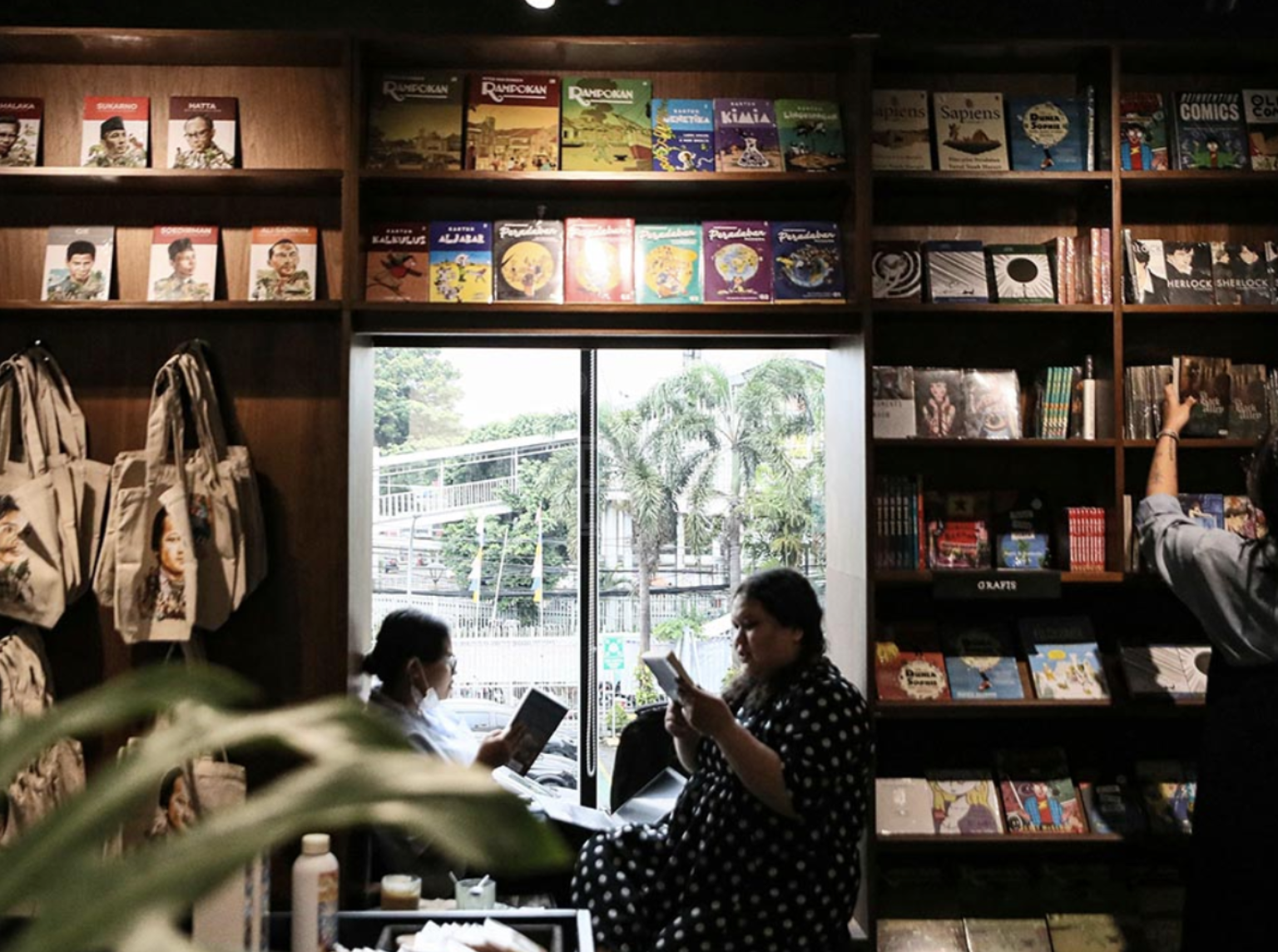
Markaya, one of Gramedia’s newest bookstores.
And so, Adi argues, that the second part of bookstores are the invitation to converse. Increasingly, their editors are playing a bigger role in bringing authors live, face to face, with their readers, in a desire to help them to learn and grow with the ideas they have explained in their
books.
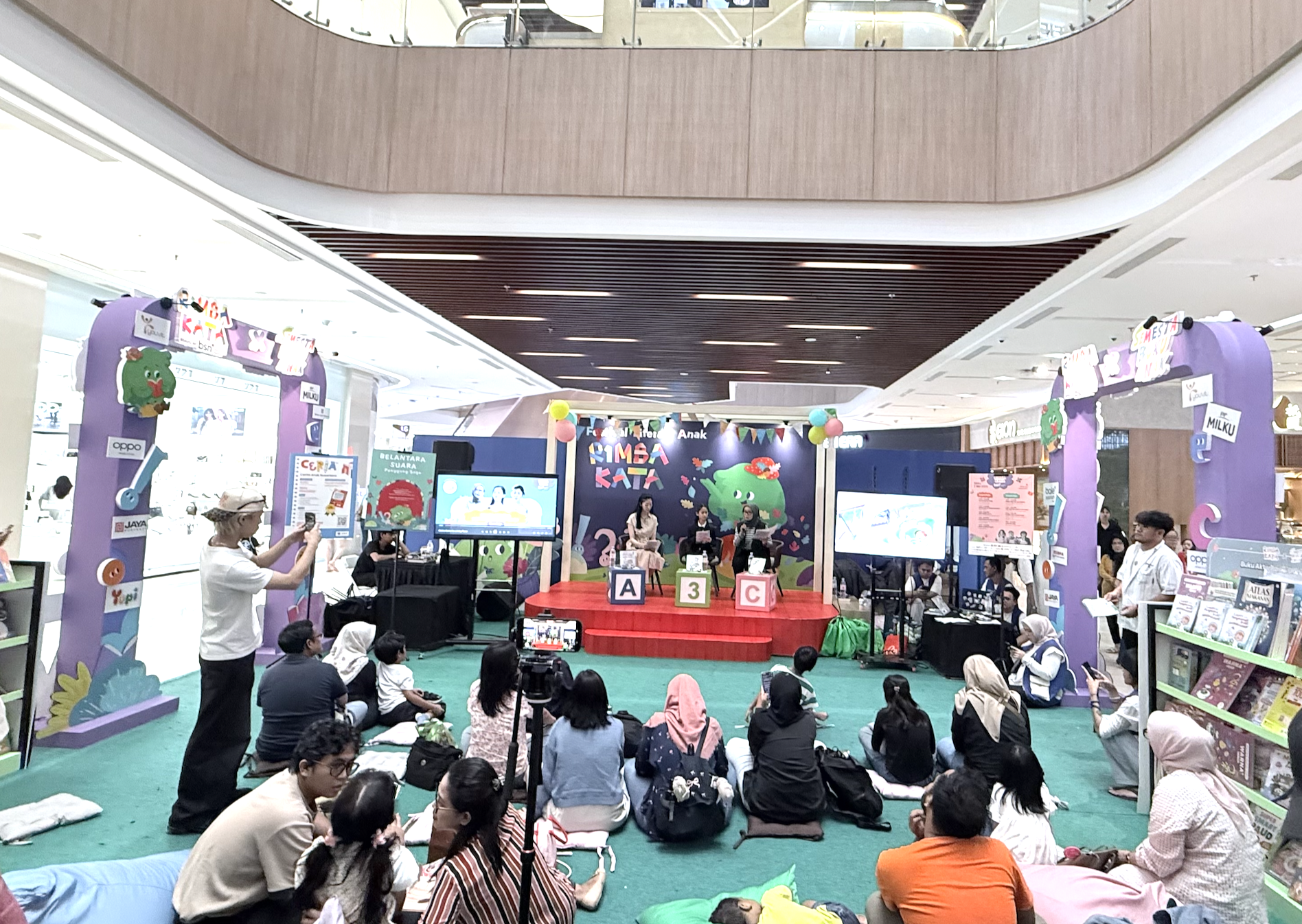
That afternoon, as I looked at Haruka and her daughter Kaede, look out to the adoring crowds beneath them, it was strangely satisfying. Yes, it was a short book with a simple story. But behind that simple story was an important one.
That if we came together, we could save the Earth.
And so even if you don’t quite know what to do today, pick up a physical book and read. Get into the real world. Join a reading club.
You might just be surprised at what you
find.
1 talk
If you had no social capital, but had books, you’d still land up quite far in life.
1 tip
Over the last 3 years, one of my happiest moments have come with The Saturday Book Club, which is a monthly
meeting of non-fiction readers, all bringing their own books.
2 months ago, I sat down with Jia Li, the founder of the book club, to talk about why she wanted to do this, despite all the work involved.
Imagine if Singapore could be the hub for authors. Imagine if we could regularly bring the Taylor Swift equivalent of authors.
Imagine what that would do for people’s learning.
She’s slowly led the club from just 4 people, to a regular 120 people monthly now. None of that can be underestimated.
One final story. In 2008, I landed up in an elite school, and started visiting the home of a friend whose family ran a listed company. Over dinner, they would regularly talk about
trading.
Once, I heard him say,
today, I just lost 1m in trading.
That’s when I started to realise the difference between how the rich and the poor made money. The rich used leverage.
Not knowing where to start, but knowing
that I desperately wanted to get rich, I started to read the Invest section of the newspaper, and checking out all the ‘best’ self-development books that were at the top of Internet lists.
Most repeated the same ones. But over time, I began to see some patterns, and took the actions they recommended.
I wouldn’t say that I’m very rich now, but I would think that without those
books, I would still be griping about how the rich had more, and I had none.
Some books that personally changed my view of the world: