2-3-4: If you are swallowing your problems and emotions, and can never talk about them...
Published: Sun, 01/25/26
Feeling stuck about the resentment you feel?
2-3-4 Friday: Say what you mean
‘Seeking to spark the most potential within you per word of any online newsletter’
1 thought
Singapore had a
problem.
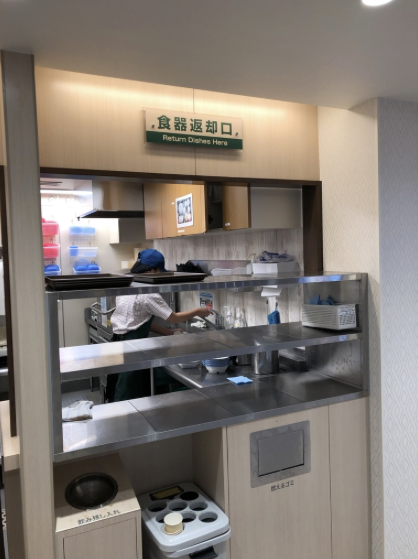
For all the food we enjoyed at the local hawker centres, what happened after the meal, was something eaters were not thinking about. They would leave their trays of food on the table, and a cleaner, usually an elderly person, would come by to clear it.
But the cleaning companies were facing increasing problems retaining the staff. The pay was low, the hours were long, cleaners had to keep walking around to clear the tables, but there were more and more tables to clear.
In 2013, the National Environment
Agency (NEA) tried their first stab at the problem. They introduced a Tray Return Initiative, to encourage diners to return their plates and trays.
But little changed. For years, tray return rates stayed stubbornly at 34%. But staff within NEA also thought,
“Singaporeans will never return their own trays.
You
must be crazy to expect them to do it.”
Then the Ministry of Law came in and said, “well, we can enforce the legislation.” So they did. There was no new law enacted, but a stronger enforcement of the previous law.
“NEA is not enacting a new law, as leaving litter on dining tables is enforceable as a littering offence under Section 17(1)
of the Environmental Public Health Act (EPHA). However, NEA will take a pragmatic posture, such as enforcing against diners who do not heed advice by enforcement officers to clear their dirty trays, crockery and litter after dining.”
Of course, there was some public consternation around why diners had to do this, when we never did it in the past.
But situations had changed. COVID had come, and shown the intense need for hygiene, to prevent outbreaks. More importantly, our civilian population were no longer as willing to do such cleaning
jobs.
From a small army of thousands of cleaners, the Ministry of Law suddenly created an army of four million resident ‘cleaners’, ordinary citizens like you and I, who were now cleaning up after ourselves.
This simple incident reveals one simple fact. The physical scarcity we think we have (the assumption that Singaporeans won’t clear up after themselves; the lack of cleaners), can often be psychological.
1 talk
The scarcity we have, might be something we think and feel, and not something that exists in reality.
1 tip
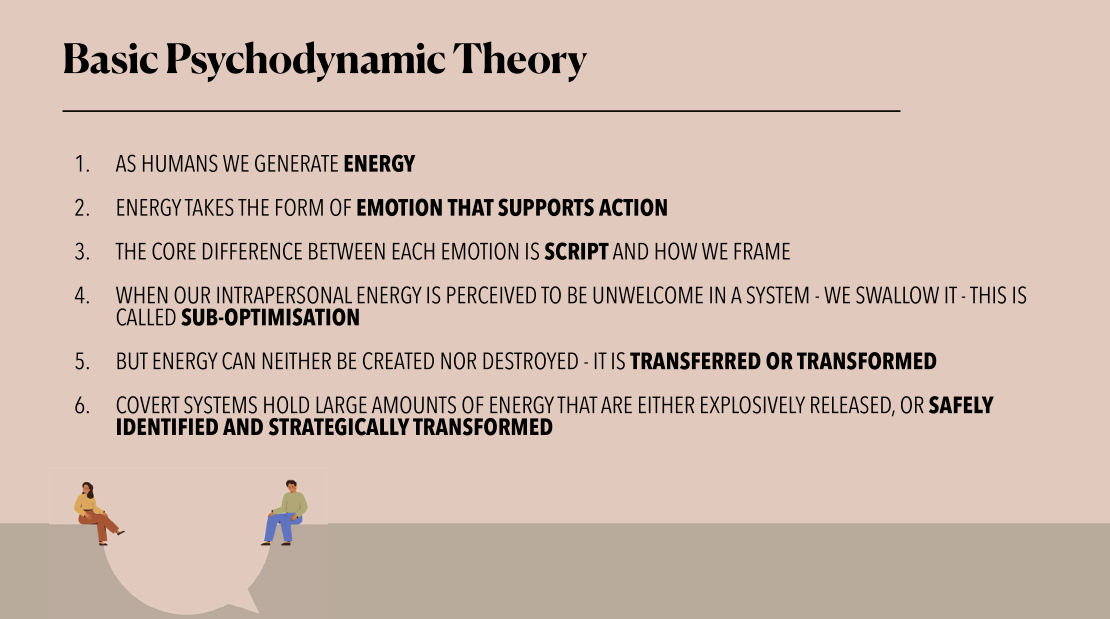
So how do you know when a scarcity is perceived, and when it is real? You can begin by first identifying what emotion or thought you’re suppressing within yourself.
Credit: Tong Yee, during the REACH Voices Unfiltered event
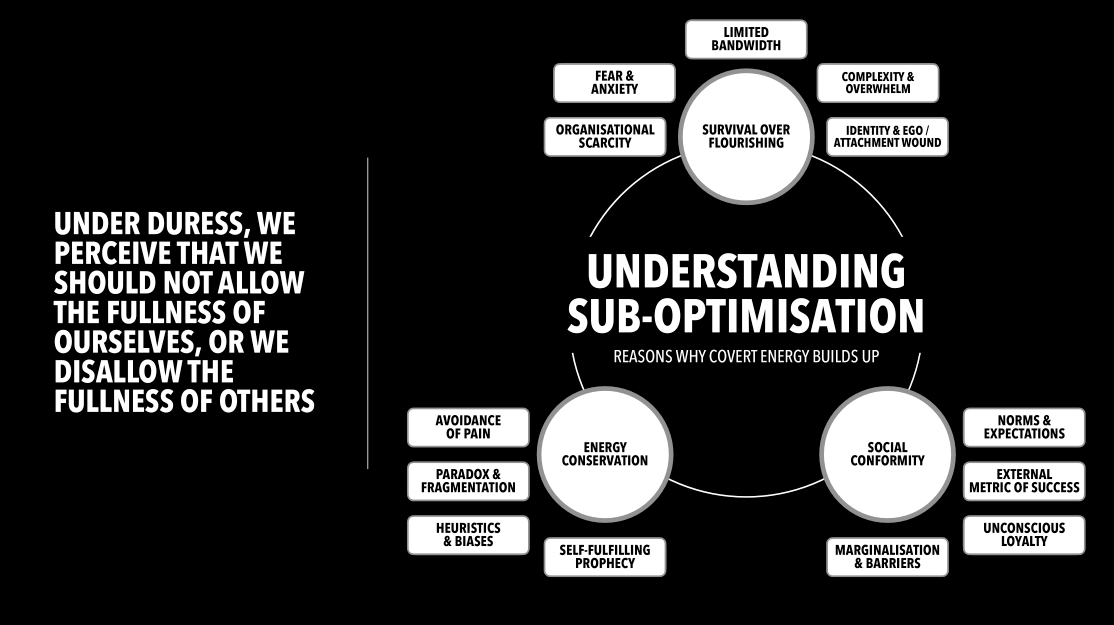
You’re sub-optimizing, to maintain harmony. Some examples:
You sit in a meeting you do not know why you’re in, and you check your emails, surf, all without saying, “I’m not quite sure what we are doing here.”
You roll your eyes at what your boss says, rather than saying what you think.
So your displeasure just ends up being stored within your body, and it slowly coalesces to form
resentment, and cynicism.
If we look at NEA’s challenge, for years, they had been sub-optimizing. They had tried their best to help diners, by increasing the incentives for cleaners, raising the pays of cleaners, but nothing would ever change.
Credit: Tong Yee
It took COVID for them to finally realise that the problem they had “Singaporeans will not clear up after themselves” was something that existed, in their own mind. NEA finally had enough, and said in no uncertain
terms (14 May 2021 News Release), “While NEA has seen good results at some places, it is not as satisfactory as we would
like.”
If you’re struggling with a problem, and you wonder why no one seems to help, bringing that problem to the surface, and fully processing it with people who are in a position of influence, can be a lot more helpful than just swallowing your discomfort.
The next time you face a problem, don’t just keep your emotions within. Speak about it maturely and
honestly.
Yes, I know, you can seem abrasive when you start doing this. But one question Tong Yee asked, struck me, "Which is better? That you're openly misaligned, or that you pretend that you're aligned?"
And it's even worse when you don't feel like you can bring these disagreements to the forefront of your colleagues, family, and
partner.
If you'd like to change, build more safety within the systems you're a part of, by first removing the assumptions you may have had, and then slowly testing the boundaries of what you can say.