2-3-4: As the world goes to pieces, it's the middle powers, and the middle people who must do something
Published: Sun, 02/01/26
Updated: Sun, 02/01/26
Is the US pulling out of the world's institutions, a reaction to us free-riding for years?
2-3-4 Friday: It’s time to stop thinking that apathy will solve anything
1 thought
Recently someone I respected asked,
Is what's happening in the US a
reaction to us, the world, free-riding on it for the past decades?
The US is now $38 trillion in debt, and it's had enough.
Don't we have a role to play in this?
Mark Carney’s speech has been reverberating through the developed world, and I draw excerpts from it.
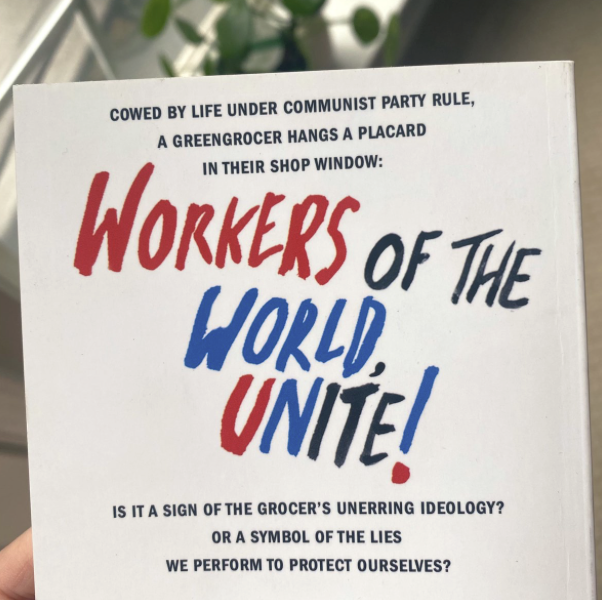
In 1978, the Czech dissident Václav Havel, later president, wrote an essay called The Power of the Powerless, and in it, he asked a simple question: how did the
communist system sustain itself?
And his answer began with a greengrocer.
Every morning, this shopkeeper places a sign in his window: ‘Workers of the world unite’. He doesn't believe it, no-one does, but he places a sign anyway to avoid trouble, to signal compliance, to get along.
And
because every shopkeeper on every street does the same, the system persist – not through violence alone, but through the participation of ordinary people in rituals they privately know to be false.
Havel called this “living within a lie”.
I would be the first to say that I was doing this - putting the sign in the window, and living within a lie.
Growing up in a Singaporean school, we would say the pledge every morning, and
pledge ourselves as one united people,
regardless of race, language or religion,
to build a democratic society
based on justice and equality.
But did I really believe Singapore’s system of meritocracy, that everyone had an equal chance for success, as long as one studied hard? No, I didn’t.
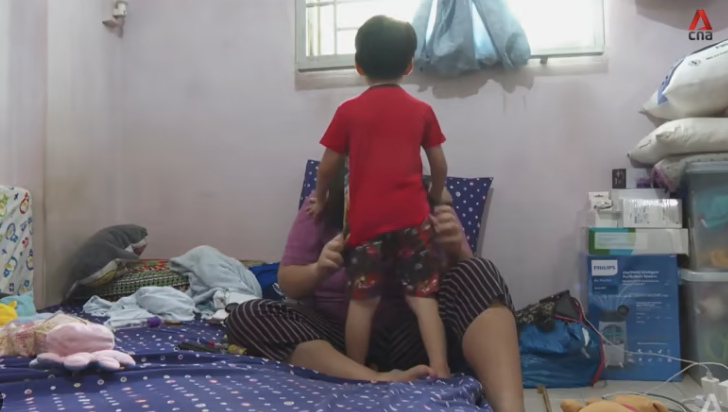
Singapore rental flat, credit: CNA
I had seen it. I had been in public rental flats, where 6 kids would scramble around a one-room flat, and kids would be climbing up and down the metal gate, trying to look for some stimulation. The mother would be trying to put one to sleep, whilst trying her best to get the other kids to behave themselves.
How
would meritocracy work for such a mother that couldn’t even figure out where to put the two youngest kids whilst trying to walk her three other children to school?
Yet I never did anything about it. I would complain, I would write, but I would never get my hands dirty and stuck in.
1 talk
Mark Carney has a solution.
It means building what we claim to believe in, rather than waiting for the old order to be restored.
It means creating institutions and agreements that function as described.
And it means reducing the leverage that enables coercion – that's building a strong domestic
economy.
Before that, he was the founder of SG Quarantine Order Support Group, that was simply a Telegram group set up to help citizens navigate through the doubts and uncertainties of their Covid quarantine journey. It was receiving 300+ messages per hour at the peak of its operations, and even enlisted volunteers to deliver meals and groceries to citizens who are unable to acquire food during
quarantine.
Meeting him, I wondered why he would do all these things for the community. There wasn’t anyone funding him, and he even had a full-time job.
I just wanted to do something to help.
Was that it? I tried digging and probing for more. Maybe it was because he had a religious
calling that made him persevere despite all the hard work?
No, it wasn’t.
He’s simply wanted to solve the community’s problems.
He could complain, but he knows there is limited leverage to what you can get from advocating, and banging on the drum, in front of those in
power.
Much easier for you to do something that you think works, and then get them to hop on the bandwagon once it works.
When you run your own solution, it takes the risk out of the Government’s hands.
The two questions today are not:
What are you doing for our community?
Rather, it’s about what you can do, if you don’t have time and energy to help.
Give your money to organisations that can do your work better.
Often we forget that charities and non-profits are vehicles for our profits, but not necessarily for our
persons.
We mistakenly think that we’re the ones who have to operationalize these projects for good.
No - just give your money to professional charities and the workers in them, who think all day about how to do it better.
And as Mark Carney reminds us, this is the time where
we have to stop pretending that being apathetic, reaping the good (unseen) works of the charities that keep our communities going, not giving anything, is going to be enough to sustain our organisations.
If you want to do better, give something. And sometimes, the easiest thing to do is to give money.
Caveat: I don’t get any commissions from saying the
above.