2-3-4 Friday: On masculinity
‘Seeking to spark the most potential within you per word of any online newsletter’
1 thought
One searing memory growing up was when I was schooling, and we had a post-exam activity of trying archery. As we sat on the bus, I realised that the bus was passing my home. In a little corner of my eye, I saw my dad walking home. It
was 11am, and I wondered what he was doing there.
Shouldn’t he be working? Later, I realised he’d lost his job, and that he was trying desperately to find another one.
Another consultant recently told our class about how he’d begun consulting for the Singapore Government, as many older men, particularly between the ages of 45 to 65, were being retrenched. They were often seen as difficult to work with, stubborn, and set in their ways. Women, were seen as far easier to
work with.
Then came the time when I sat across a real-estate investor, still amazed at what was around me. We were in a swanky hotel, enjoying some medium rare beef. It was delicious, and yet as we carved up the beef, he leaned in and shared about the jobs that were available to him if he retired.
- Grab driver (something akin to Uber)
- Security guard
Had we come so far in our development as a nation, only to be able to offer such jobs
to good men?
“The more I consider what men have lost—a useful role in public life, a way of earning a decent and reliable living, appreciation in the home, respectful treatment in the culture,” writes feminist author Susan Faludi in her 1999 book Stiffed, “the more it seems that men of the late twentieth “century are falling into a status oddly similar to that of women at mid century.”
Excerpt by Richard V. Reeves, Of Boys and Men: Why the Modern Male Is Struggling,
Why It Matters, and What to Do About It
We often talk about how women need more rights, but what we often miss is the accompanying slide down the other scale in terms of men’s traditional achievements - university attendance, pay scales, and the tendency is to blame the women for taking those.
That’s not true - and this author doesn’t believe that.
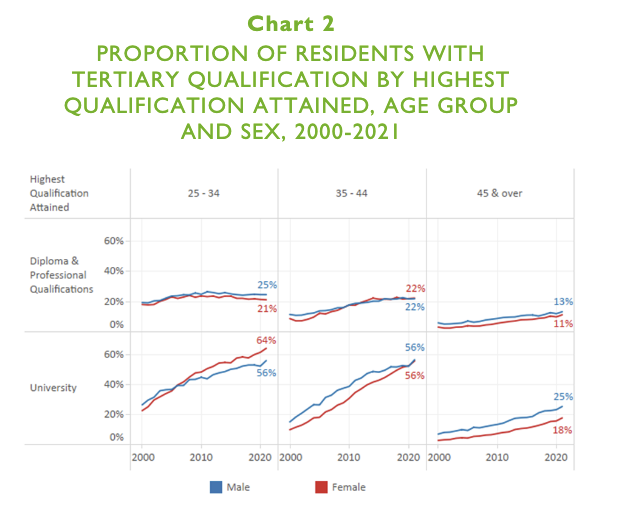
Bottom left graph shows how females have pulled ahead in Singapore in terms of gaining university qualifications. Credit: Singstat Singapore
Instead, the deeper issue has been how
- Men have lost ground in higher education
- The jobs in HEAL industries (Healthcare, Education, Administration, Literacy) fields have not been as open to men
- Policies have neglected the continued disenfranchisement
of men
This has led men to turn to supposed saviors like Andrew Tate and the manosphere, promoting masculinity, misogyny, and opposition to feminism.
None of this is healthy.
How can we help?
1 talk
1 tip
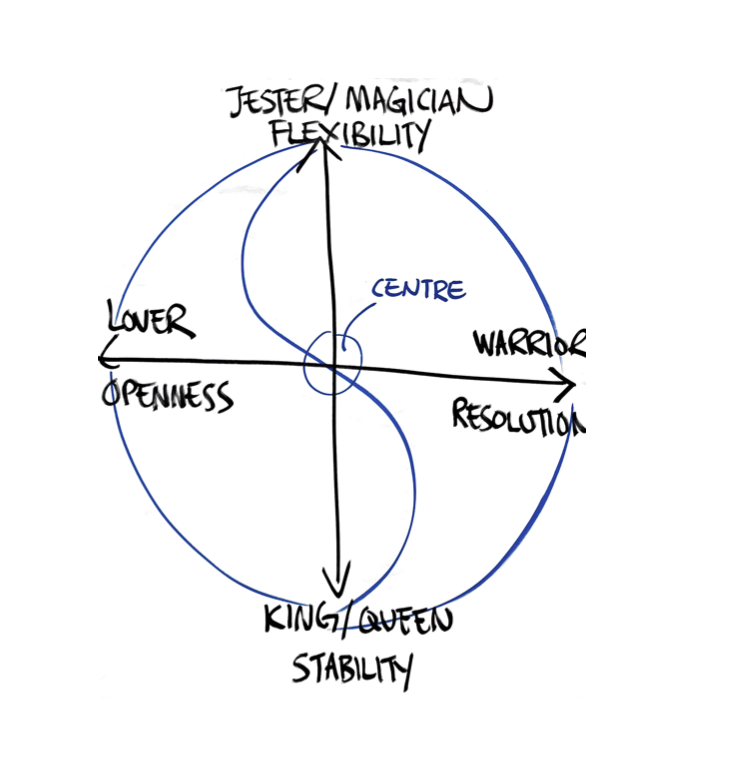
Archetypes, by Moore and Gillette. Credit: Tong Yee
If you’re a male reading this, I’ve found Moore and Gillette’s work on archetypes helpful. Rather than positing that we’re ‘either/or’, archetypes share a perspective that we’ve a range of different energies that we can access.
One of the deepest areas of growth for me has been learning to see
the good in healthy, masculine aggression. Two years ago, when I attended Tong Yee’s class, I struggled to do an exercise where I had to look into another person’s eyes for 3 minutes, without any speech. I would fidget, look up and down, and be extremely worried that someone would look into the deep recesses of my soul.
One of his staff pointed out that I seemed to struggle with silent anger. It clicked.
In that moment, I realised that for a long time, I’d
never been able to express my anger in healthy ways. I’d always been scared that I would hurt someone else, like my parents did when they were angry.
What is the energy that you find hardest to access? There, you might find a good area of growth.
If you’re a lady today, take effort to spend more time with your closer male friends, reaching out, even when they seem resistant. Males may not talk readily about their emotions. Nor do they reply easily if you
suddenly reach out with a ‘how are you?’ But take time - ask them out for a coffee with someone else.
Why? Because more than ever, males need support. They are often lonely, tired, and they have no one to share openly with.
During my depression, the change came for me when a friend reached out and was willing to sit with me through my pain, even though there was no need for her to do so.
All the attention on women’s empowerment has really
helped us to build a fairer world. Yes, women are still disadvantaged in many ways. But it doesn’t have to be a zero-sum game.
Life is already hard enough. We don’t have to be crabs in a bucket, constantly pulling each other down.
We can all help each other.
John
Live Young, Live Well - Work Your Love